
Why Didn't Rates Fall After This Week's Jobs Report?
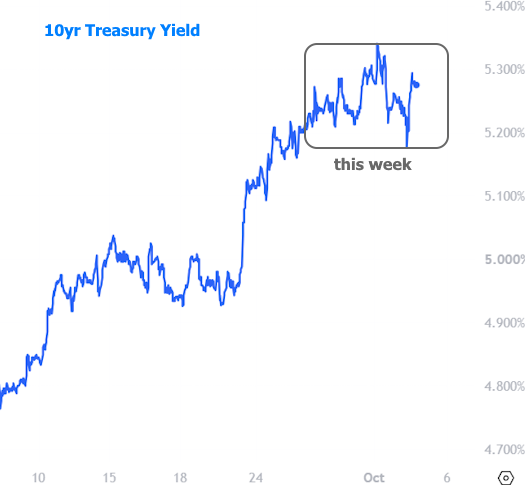
It's been a bumpy ride for interest rates recently, and while this week was no exception, the pace subsided slightly. Nonetheless, rates moved higher with Wednesday seeing the highest average 30yr fixed rates since November 1, 2023. On the bright side, that's a lot better than the story in 10yr Treasury yields, which hit their highest level since 2002.
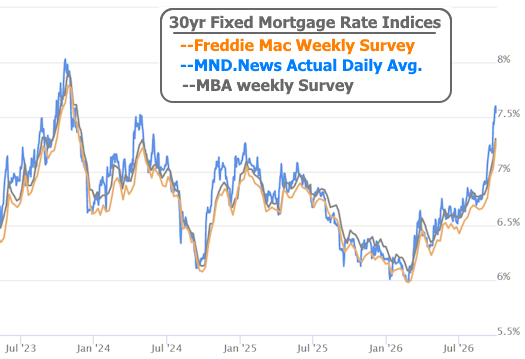
The first 3 days of the week were actually mostly sideways in the bigger picture--the sort of final chapter we often see when a sharp, sustained rate spike is getting ready to do something else. Thursday's action added to that optimism as rates managed to recover substantially with help from an old ally.
More than a decade ago, concerns over potential contagion in the European debt market helped U.S. rates remain a lot lower for a lot longer. Europe's monetary policy response helped get us back to long-term lows even after the "taper tantrum" of 2013. By the time Brexit helped rates hit new long-term lows in 2016, Europe increasingly fell out of the rotation of things the U.S. rate market worried about.
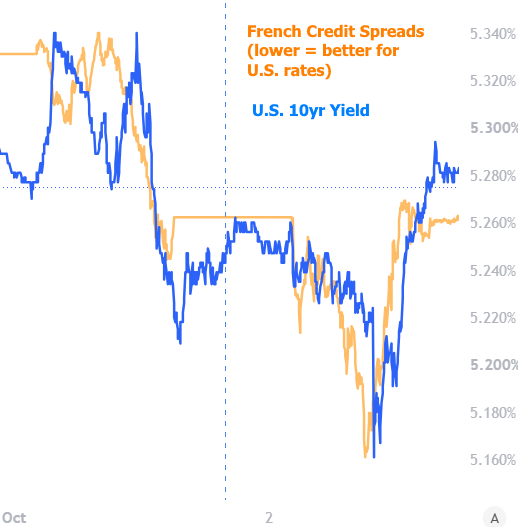
Very long story short, French fiscal concerns have reignited a small-scale version of that old-school contagion fear. This helped U.S. yields hit their best levels of the week on Thursday afternoon.
Friday morning initially took yields even lower after the jobs report headline came in much lower than expected. Unfortunately, it didn't stick. In order to understand why, some paradigm evolution is required.
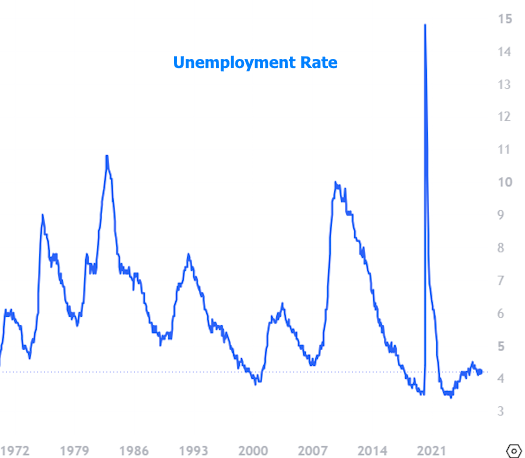
While it's true that nonfarm payrolls (the monthly job count) have long been the most important part of the jobs report, that began to shift in 2025 due to changes in labor force composition. By early 2026, Fed speakers were warning that markets should focus on the unemployment rate for a clean read. In fact, some research suggests it doesn't take any new job creation to keep the unemployment rate flat these days.
This means the big drop in payrolls wasn't necessarily the good news that interest rates were hoping for. At first glance, it seemed like the unemployment rate was also weaker because it rose from 4.1% to 4.2%, but there were a few big caveats.
These are rounded numbers. The unrounded unemployment rate only rose to 4.175% from 4.141%. Furthermore, if we adjust for growth in the labor force, it would have been 3.951%. Simply put, this is anything but a weak number, and the market eventually traded accordingly.
In addition to the nuance in the jobs report, our French connection also reversed course. Between that and a moderate uptick in oil prices, bond yields moved back into the red by the afternoon and many mortgage lenders were forced to raise rates back toward the week's higher levels.
-
Although the headline job growth number was weaker than expected, other parts of the report showed a relatively resilient labor market. Bond markets reacted to the full report rather than just the payroll number, limiting the potential improvement in mortgage rates.
-
Employment data can influence expectations about inflation, economic growth, and Federal Reserve policy. Those expectations affect bond yields, which can influence the direction of mortgage rates.
-
Not necessarily. A weaker jobs report can put downward pressure on rates, but investors consider several factors, including unemployment, wages, inflation, oil prices, and other economic developments.
-
The unemployment rate provides another measure of labor-market strength. If unemployment remains relatively stable, markets may interpret the labor market as stronger than a low payroll number alone would suggest.
-
Mortgage rates can change quickly and are difficult to predict. Instead of relying on a particular future rate, homebuyers can review current financing options, monthly payment scenarios, and overall costs to determine what fits their situation.